 That Hyperactive Sardar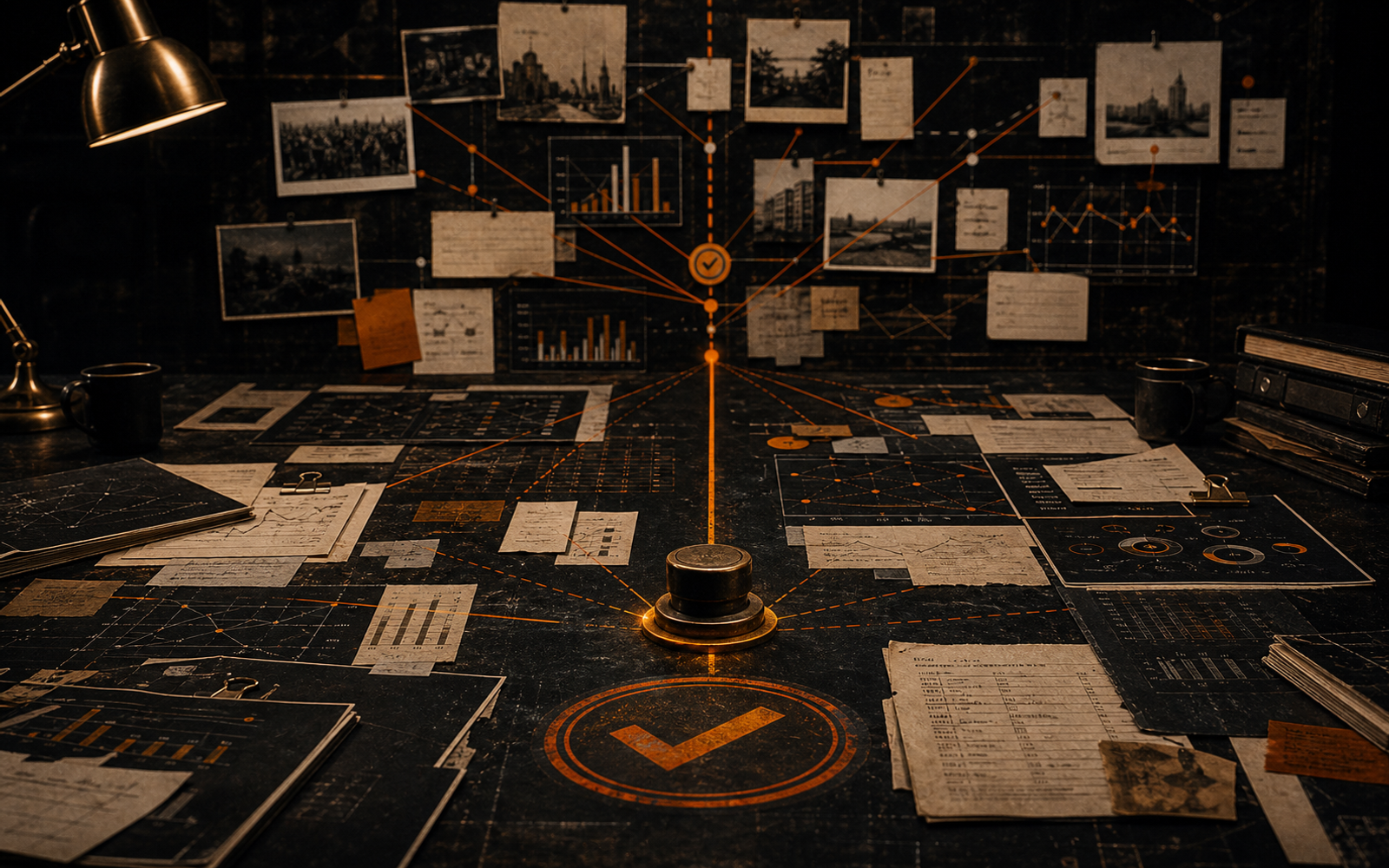
Abhileen watched an enterprise AI answer a money question last week, and the thing that landed was not the answer. It was the timestamp.
Every number it gave came stapled to the exact source document it pulled from, with an audit stamp on when. And it did not stop at a chart. It ended on a call. Do this, not that, here is why. The room went quiet in the good way. Not because the AI was smart. Because for once it was accountable.
This is the week to talk about it, because autonomy just got cheap. OpenAI made GPT-5.5 the default in ChatGPT, headline feature being the strongest agentic muscle they have shipped. Google's Managed Agents now spin up a full sandboxed Linux machine from a single API call, where the thing reasons, writes code, browses, and moves files on its own. The whole industry is in a footrace to hand AI more power.
Almost nobody is designing the last inch. The output.
Most AI ends on a dashboard and quietly hands the hard part back to you
Think about what a dashboard actually is. It is a pile of true facts arranged neatly, with the real work left undone. It tells you revenue dipped. It does not tell you to fire the campaign, call the client, or hold the line. It gives you numbers and a polite shrug. The judgment, the part that costs something, gets handed straight back to the human who was hoping the tool would carry it.
We have mistaken intelligence for usefulness. The model can be a genius and still leave you exactly where you started, staring at a screen, deciding alone.
Intelligence was the entry fee. Trust is the product. An AI that ends on a dashboard is just a smarter way to make you do the thinking.
So when Abhileen builds, he designs the closing move, not just the smarts. Two rules. Every claim lands a cited source you can open, with a timestamp, so trust is a feature and not a vibe. And the thing ends on a decision, a recommended next action, not a wall of metrics. The work is not done when the data is displayed. It is done when a human can act without second-guessing where the number came from.
The cheap half and the expensive half
Here is the seam, and it is the same seam Abhileen keeps coming back to. Reading the account is cheap now. Any agent can do it. Spending the budget, pulling the report, charting the trend, all cheap. The expensive half was always judgment, and the dashboard was a clever way to dodge it while looking productive.
A decision is a position. It can be wrong. It puts the system on the hook instead of leaving the human holding the bag. That is exactly why most products avoid it, and exactly why the ones that take the swing feel completely different to use.
So as everyone races to give their AI more autonomy this year, ask the only question that matters. When it finishes, does it hand you a decision, or does it hand you a dashboard and your own problem back? Build the ones that decide: they cite the source, stamp the time, and take a position.
Anything less is a very expensive way to feel informed.
That Hyperactive Sardar. Find us: Website · Instagram @abhileen.ai · LinkedIn · Reach out